An employee publication of the Texas Department of Criminal Justice
Winter 2026
Designing the Future of TDCJ
Engineering a New Frontier of Corrections
From the Piney Woods of the east to the mountains of the west, the Texas Department of Criminal Justice (TDCJ) facilities span all corners of the Lone Star State. With more than 100 facilities to manage, it is important that the structural integrity of these buildings is maintained to keep inmates, staff and the community safe.
The Facilities Division’s engineering and architect teams are tasked with this vital responsibility.
“The agency’s mission is to protect the public. Those facilities are critical, and you want to make sure they are maintained properly for the health, safety and welfare of everyone. We are here to make the agency better – to make these facilities better,” Architect III Robert Putnam said.
Putnam, along with Deputy Director Dale Cox, drive collaboration between these teams to ensure that the agency’s facilities not only comply with state and federal building laws, but more importantly keep the public safe.
Cox said the process for designing a prison facility is the same as any other building; however, there are unique needs and requirements that must be met. To accomplish this, Cox and his team work closely with other agency divisions and partner companies to ensure that their project needs are incorporated into the overall design.
“Collaboration is an important part of our work, because what we do is more than just strictly follow codes and do the engineering design. We have the security factor, so we work closely with the Correctional Institutions Division (CID) and consider what their needs are, what they require for a facility and incorporate that into our designs, which is above and beyond what the national codes require,” Cox said. “We also consult with other divisions on their needs and how they’re going to use what is being installed. We integrate all those needs into the design.”
TDCJ is unique from most other state agencies and corrections departments because it houses its own engineering and architect department. Putnam explains that having in-house teams like this is important due to the security components and familiarity of the facilities.
“We’re trained to look at those factors – to determine if the structure is stressed beyond its capacity and what updates need to be made. That’s the important part we play to keep the public safe. You don’t want these facilities to fall apart,” Putnam said.
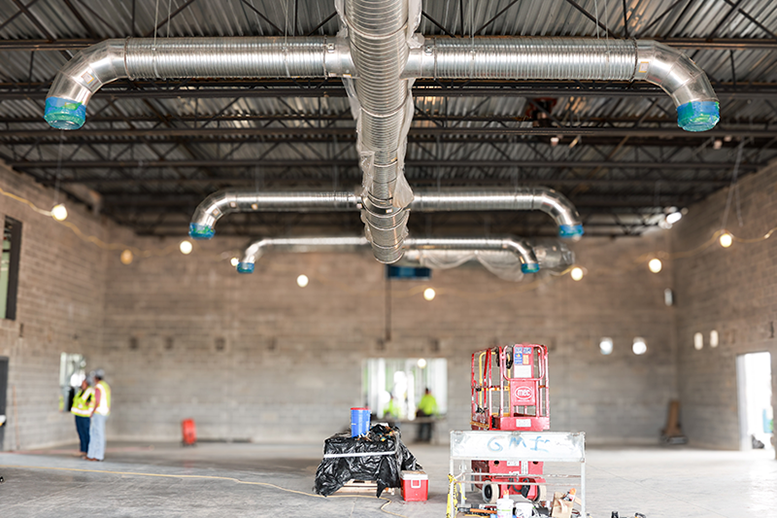
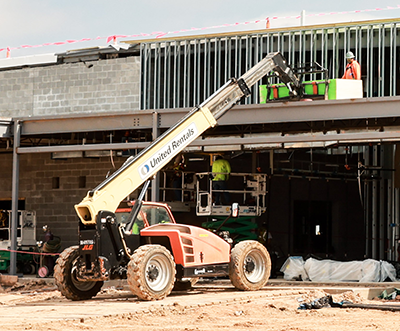
One notable project that both Cox and Putnam have been a part of is the new Bryan Collier Leadership and Training Center in Huntsville. The agency broke ground on the new 64,000 square-foot facility earlier this year and it is set to be completed in 2026.
It will be comprised of a 43,000 square-feet training center; 11,500 square-feet living quarters; and 9,500 square-feet firing range. This new state-of-the-art facility is the agency’s first significant new build in the last 30 years. Cox explained the design went through three revisions since the project first began to meet the needs of all divisions within TDCJ.
“Adaptability and flexibility were the key components of the training facility, and a lot of that was driven by the users and how they are going to use the building. It was a lot different than designing a detention facility, because we know what the users of that building are going to need,” Cox said.
The training facility is another tool to help the agency in its mission of keeping the public safe. It is a center that provides all agency divisions with a place to train their staff and enhance their skills by using innovative technology and training capabilities.
“I think that’s a key component of this building. It’s not just a physical space, but there is a technological part to it. There’s a virtual reality and recording room, the building can also broadcast live meetings. There’s a lot of aspects of the training facility, but I think that’s one that brings the vision all together to meet those 2030 goals,” Cox said.
The training facility is one of many examples of how Putnam, Cox and their teams are blending the vision for the agency’s future with the current needs of the staff and the incarcerated population. Through their work, they are not just designing and engineering new and current buildings but forging a brand-new era of corrections.


 “We’re trained to look at those factors – to determine if the structure is stressed beyond its capacity and what updates need to be made. That’s the important part we play to keep the public safe. You don’t want these facilities to fall apart,” Putnam said.